
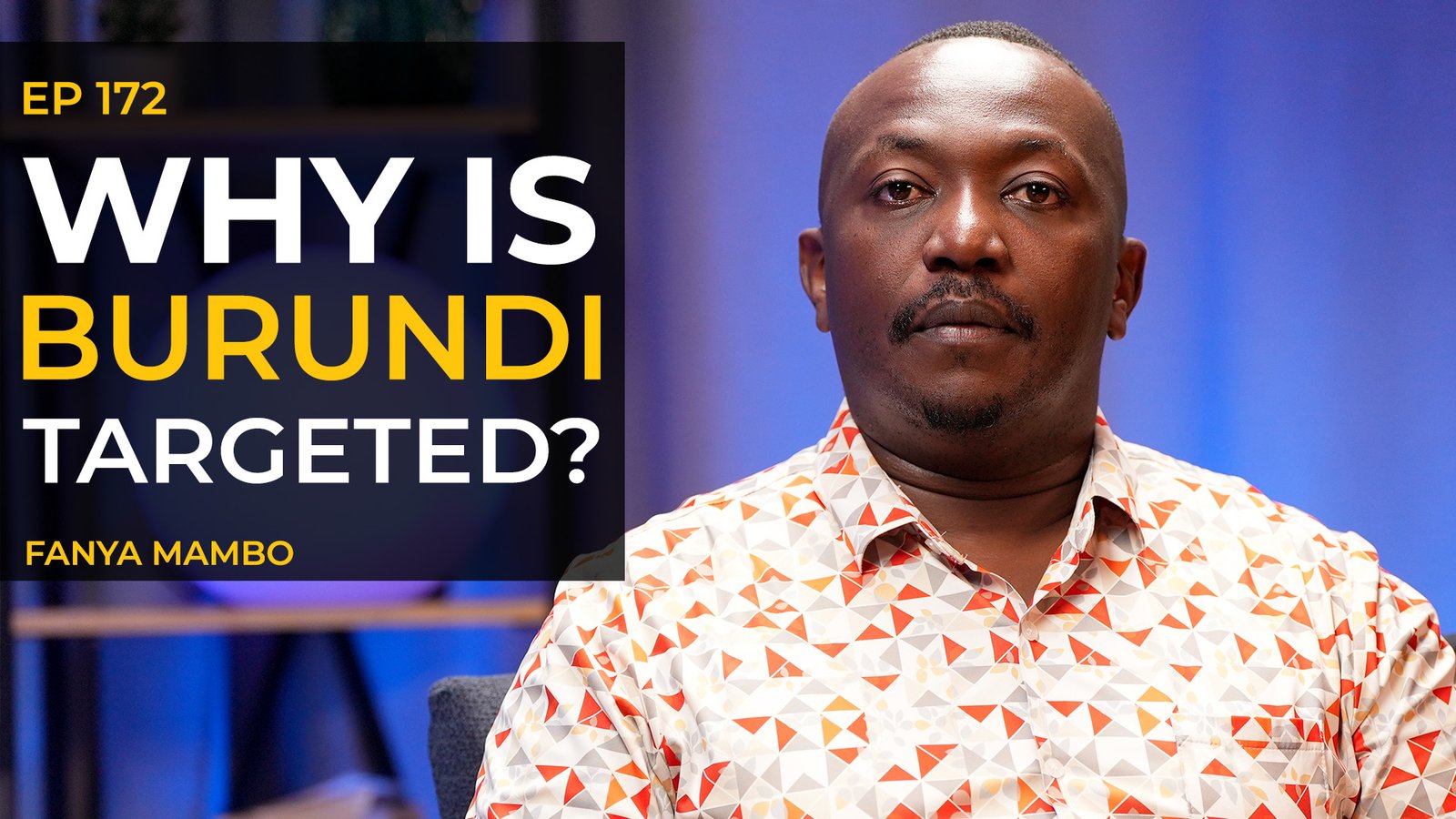

As debate grows around foreigners living and working in Kenya, Fanya Mambo has challenged the government to strengthen immigration controls while warning against using Burundians and other foreign nationals as scapegoats for the country’s deeper political and economic problems.
Speaking on Mambo Africa, Fanya argued that Kenya has every right to control its borders and ensure that people entering the country comply with immigration requirements.
But he also insisted that the presence of foreigners should not be used to distract citizens from challenges such as unemployment, taxation, struggling businesses, poor public services and the mismanagement of public resources.
His central argument is simple:
Kenya’s biggest problem is not Burundians. It is bad leadership.
Burundians in Kenya and the Growing Migration Debate
The discussion comes amid concern among some Burundians and other foreigners living in Kenya following renewed calls for foreign nationals to register with authorities.
Critics have raised concerns that such measures could create fear among migrant communities or encourage discrimination.
Fanya argues that Kenya must separate two different issues.
The first is illegal migration and border enforcement.
The second is the treatment of foreigners who are already legally living, working and doing business in Kenya.
For him, stronger immigration controls should begin at the country’s points of entry rather than with blanket suspicion directed at people already inside the country.
“Control the Border”
Fanya says Kenya needs a more effective immigration system capable of determining who enters the country, why they are entering and whether they have permission to work or conduct business.
If someone enters illegally, he argues, the government should have systems capable of detecting and addressing the problem.
But allowing weak border controls and then later blaming foreigners for economic problems is not an effective solution.
The responsibility, he says, begins with government institutions.
Kenya therefore needs stronger border management, clearer immigration procedures and consistent enforcement of existing laws.
Are Foreigners Really Hurting Kenyan Businesses?
Fanya also challenges the argument that foreign traders are the main reason Kenyan businesses are struggling.
He says many local traders have been complaining about far broader issues, including:
- High taxes
- The cost of doing business
- Reduced purchasing power
- Unemployment
- Government policies
- Weak enforcement against counterfeit goods
- Pressure on small and medium-sized businesses
Removing foreigners, he argues, would not automatically solve any of these problems.
A Kenyan trader struggling with taxes would still face those taxes.
An unemployed graduate would still need a job.
A business struggling with expensive operating costs would still face those expenses.
For Fanya, this is why the migration debate must not become a distraction from economic reform.
East African Integration Complicates the Question
The debate is particularly important because Kenya is part of the East African Community, whose long-term vision includes deeper economic integration and greater movement of people, labour, goods and services across the region.
Burundi, Kenya, Uganda, Tanzania, Rwanda and other EAC members are increasingly economically connected.
Fanya therefore questions how governments can promote regional integration while simultaneously creating fear around citizens from neighbouring countries.
He argues that Kenya should protect its national interests while also recognising that many Kenyans themselves live, work and operate businesses elsewhere in East Africa.
Policies adopted in Nairobi can have consequences for Kenyans living outside the country.
Lessons From Anti-Foreigner Sentiment Elsewhere
Fanya also warns against assuming that removing foreigners automatically creates jobs for citizens.
Migrants are not only workers.
Some are also entrepreneurs who establish businesses, rent property, buy goods locally and employ people in their host countries.
If those businesses disappear, jobs can disappear with them.
This is why Fanya believes Kenya should focus primarily on creating economic opportunities rather than framing foreigners as the source of unemployment.
The real challenge, he says, is building an economy capable of generating enough jobs and opportunities for citizens.
Counterfeit Goods and Government Responsibility
Another issue raised in the episode is the movement of counterfeit or illegal goods into Kenya.
Fanya questions why products can pass through official entry points, attract taxes and duties, reach the domestic market and only later become the subject of enforcement operations.
If products should not be entering the country, he argues, government agencies should stop them before they reach traders and consumers.
For him, this again demonstrates the importance of functioning institutions.
Citizens should not carry the consequences of failures that should have been prevented at the border.
Government Spending and Public Priorities
The conversation expands beyond migration into the broader management of public resources.
Fanya questions government spending priorities at a time when many Kenyans continue struggling economically.
He argues that public resources should first address essential needs, including workers who provide important public services.
Teachers, nurses and other public-sector employees should not have to repeatedly fight for resources while government spending continues elsewhere.
For Fanya, this is ultimately a leadership issue.
Government is not only judged by how much money it collects.
It is judged by what priorities that money serves.
Political Goons and Youth Unemployment
Fanya also condemns the continued use of young people as political goons.
He argues that politicians take advantage of unemployment and poverty by recruiting young people for political mobilisation and confrontation.
Instead of exploiting unemployed youth, leaders should focus on creating opportunities that allow young Kenyans to build productive lives.
This becomes particularly important as the country approaches the 2027 General Election.
Political competition is already intensifying, and Fanya warns that Kenya cannot afford another election cycle dominated by violence, intimidation and manipulation.
“Bad Leadership Is the Real Problem”
Throughout the conversation, Fanya repeatedly returns to one central theme: Kenya’s problems are interconnected.
Unemployment is a problem.
Taxation is a problem.
Weak institutions are a problem.
Political violence is a problem.
Poor public services are a problem.
But for Fanya, these are symptoms of something deeper.
Bad leadership.
He argues that changing individual policies will not be enough if the same governance culture remains in place.
Kenya needs leaders who manage public resources responsibly, respect constitutional rights, strengthen institutions and genuinely work in the interests of citizens.
What Should the Opposition Offer in 2027?
Fanya also challenges Kenya’s opposition to present a serious alternative to the current government.
Simply promising that President William Ruto will serve one term is not enough.
Voters need to know what an alternative government would actually do differently.
Fanya argues that protecting human life, dignity and constitutional freedoms should be among the first priorities of any new administration.
He also says government should focus on recovering resources lost through corruption and mismanagement rather than continuously placing new taxes on citizens.
For him, political change must translate into a measurable improvement in people’s lives.
Kalonzo, Gachagua, Ndindi Nyoro and the 2027 Political Battle
The episode also touches on the growing political contest ahead of 2027.
Fanya discusses figures including Kalonzo Musyoka, Rigathi Gachagua and Ndindi Nyoro, while stressing that every candidate must ultimately convince Kenyan voters individually.
Political endorsements and alliances will matter, but they cannot replace public scrutiny.
Fanya argues that citizens should examine what candidates have done, what they represent and whether their proposals genuinely address the country’s problems.
The Kenyan Diaspora Must Have a Bigger Voice
The conversation concludes with the role of Kenyans living abroad.
Fanya argues that the diaspora contributes significantly to Kenya’s economy but remains underrepresented politically.
He calls for greater access to voting for Kenyans overseas and questions why diaspora citizens should have to travel huge distances to reach the limited number of polling centres available abroad.
For him, citizens who contribute economically to the country deserve a meaningful voice in how it is governed.
Kenya Must Fix the System, Not Find Scapegoats
Fanya’s argument brings the debate back to its starting point.
Kenya should control its borders.
Immigration laws should be respected.
Illegal entry should be addressed.
But none of these measures should become an excuse to blame foreigners for problems created by weak institutions and poor governance.
Removing Burundians will not automatically reduce taxes.
It will not eliminate corruption.
It will not create millions of jobs.
And it will not fix public institutions.
Those problems require political leadership.
As Kenya moves towards 2027, Fanya’s challenge to voters is to focus on the issues that directly affect their lives and hold leaders accountable for solving them.
The question therefore becomes:
Is Kenya facing a migration crisis—or a leadership crisis that politicians are trying to redirect towards foreigners?
Watch the Full Conversation
🎥 Fanya Mambo: Kenya’s Migration Debate, Burundians in Kenya & Why Bad Leadership Must End
Watch the full episode here:
🇰🇪 What do you think? Should Kenya tighten its borders while protecting foreigners who are legally living and working in the country?
Share your opinion and join the conversation.
Mambo Africa | THEE ALFA HOUSE

Leave a Reply