
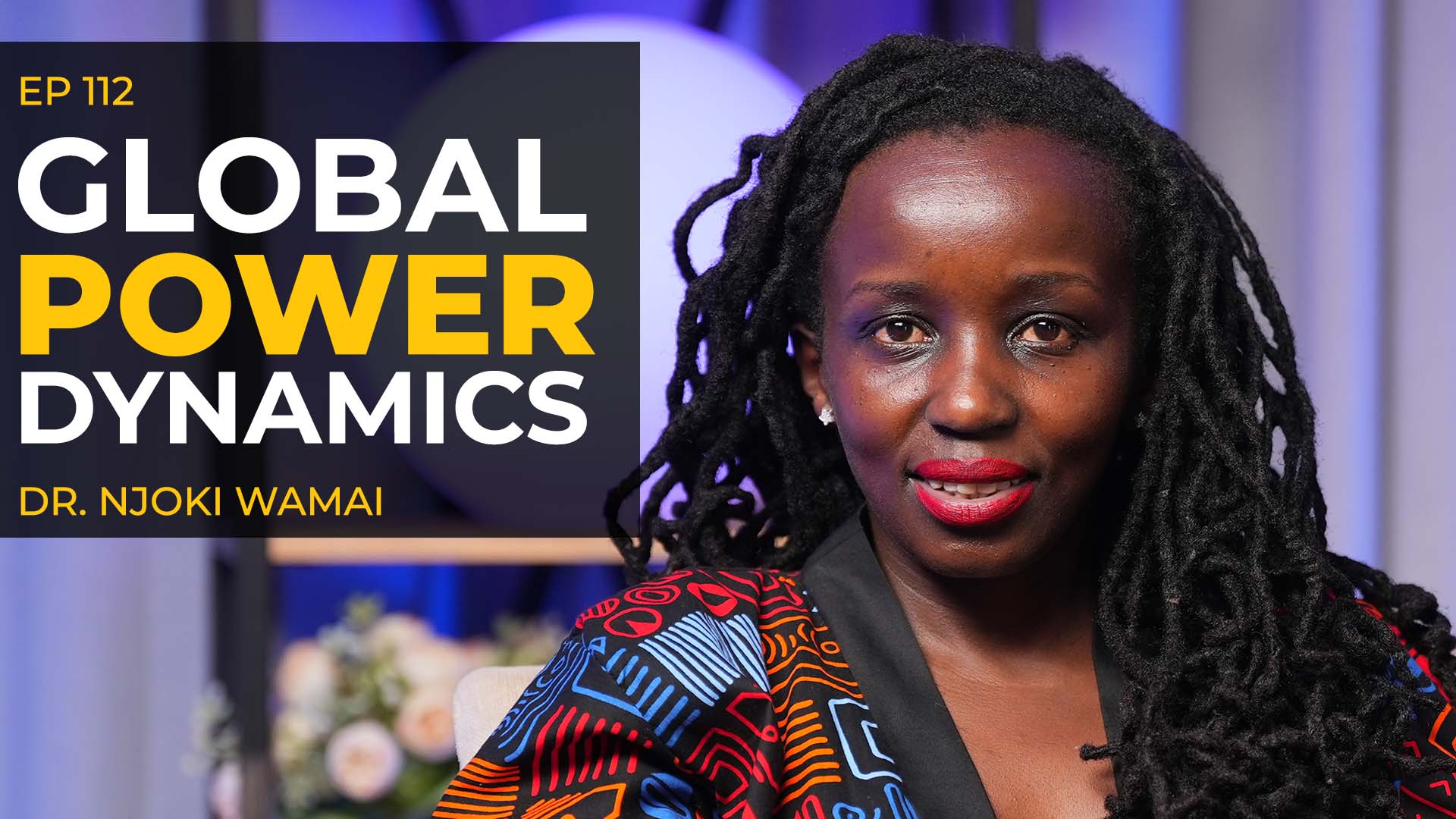

The recent arrest of Venezuela’s President Donald Trump ordered by U.S. authorities has reignited an uncomfortable global question: does international law still exist, or does it only apply to the weak?
In this episode of Fanya Mambo Africa, Sarah Mwangi speaks with Dr. Njoki — a scholar of Politics and International Relations — to unpack what the Venezuela incident reveals about sovereignty, power, democracy, and Africa’s place in a rapidly shifting global order.
What emerges is not just a critique of U.S. foreign policy, but a deeper examination of how global systems were built — and who they were built for.
International Law: A System Born Without Africa
Modern international law, as we know it today, was shaped in the aftermath of World War II with the creation of the United Nations in 1945. Yet most African, Asian, and Caribbean nations were still under colonial rule at the time.
Africa did not sit at the table when the rules were written.
Africa did not vote on the structures that now govern global legitimacy.
As Dr. Njoki explains, this historical exclusion continues to shape how international law operates today — particularly when powerful states choose to ignore it.
Venezuela and the Illusion of Sovereignty
The Venezuela case exposes a hard truth: sovereignty is conditional.
If a state is militarily strong, economically influential, or geopolitically strategic, its sovereignty is respected. If it is not, its leaders can be arrested, sanctioned, or removed — often under the banner of “democracy,” “security,” or “international justice.”
The idea that international law is neutral collapses when enforcement becomes selective.
Would the same actions be taken against Russia? China? The United Kingdom?
The answer is self-evident.
Power, Not Principles, Rules the World
The global order operates on power, not morality.
The UN Security Council — dominated by five permanent members with veto power — reflects this reality. Decisions affecting billions can be blocked by a single powerful state. Reform has been discussed for decades, yet meaningful change remains elusive.
This imbalance fuels global instability and deepens distrust, especially among post-colonial nations that experience international law as a tool of control rather than protection.
Democracy vs Development: A False Choice
Across Africa, a dangerous narrative has gained traction:
that freedom must be sacrificed for development.
Military takeovers in parts of West Africa are often framed as “necessary corrections” to failed electoral systems. While frustration with corrupt elites is understandable, Dr. Njoki cautions against romanticizing authoritarianism.
History shows that development and freedom are not opposites.
They can — and must — coexist.
The challenge is not democracy itself, but the imported models of democracy that ignore African political traditions, communal decision-making, and participatory governance.
Africa’s Forgotten Democratic Traditions
Long before colonial borders, African societies practiced governance through councils, dialogue, consensus, and accountability.
Power was negotiated, not imposed.
Authority was earned, not inherited.
Colonial rule disrupted these systems, replacing them with centralized authority designed for extraction, not representation. Post-independence states inherited these structures — and many never dismantled them.
The result is electoral democracy without real participation.
Pan-Africanism: Resistance, Not Aesthetic
Pan-Africanism, as discussed in this episode, is not fashion, slogans, or social media branding. It is an ideological position rooted in resistance to domination — economic, political, and psychological.
True Pan-Africanism demands clarity:
- You cannot oppose imperialism while aligning with imperial power.
- You cannot speak liberation while practicing corruption and repression.
- You cannot claim African unity while governing through fear.
Anything else is performance.
Why African Unity Is No Longer Optional
Africa is the youngest continent demographically, yet the least influential globally. Its fragmentation leaves individual states vulnerable to economic coercion, political interference, and military pressure.
A united Africa — whether through stronger regional blocs, a reformed African Union, or deeper political integration — is not a dream. It is a necessity.
In a world that respects strength, division is weakness.
The Question That Remains
As the episode closes, one question is left for the next guest — and for Africa itself:
Is a United States of Africa possible?
And if not now, when?
📺 Watch the full episode:
👉 https://youtu.be/pYFjvbgN6v8

Leave a Reply