
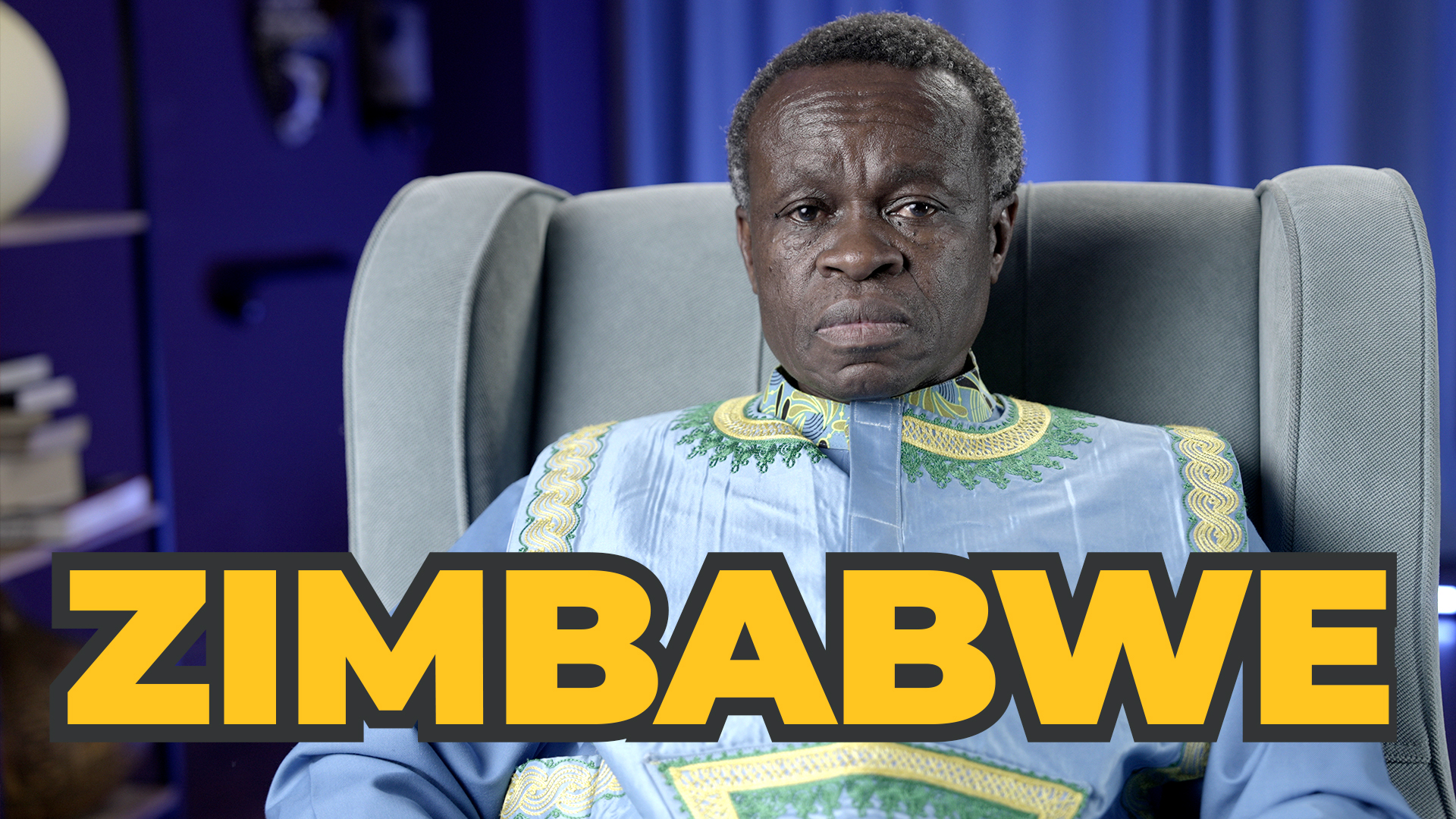

In a powerful and uncompromising episode, PLO Lumumba confronts the global narrative surrounding Zimbabwe’s land reforms and the heated exchange between President Emmerson Mnangagwa and Western media figures such as Tucker Carlson.
At the heart of the debate is a simple but explosive question:
Was Zimbabwe’s land redistribution “reverse racism”… or unfinished decolonization?
Lumumba argues that without historical context, the conversation becomes distorted — and deliberately so.
The Land Question Did Not Begin in 2000
To understand Zimbabwe, Lumumba insists we must go back to colonial history.
Land expropriation in Zimbabwe did not begin with Robert Mugabe’s fast-track land reform. It began during British colonial expansion under Cecil Rhodes and the British South Africa Company. Indigenous populations were systematically displaced from fertile land and pushed into marginal reserves, while vast agricultural estates were handed to white settlers.
By independence in 1980, a small white minority still controlled the majority of prime farmland.
The Lancaster House Agreement attempted to structure land redistribution through a “willing seller, willing buyer” model — with financial guarantees expected from Britain. But those commitments were never fully honored. As frustration mounted, land reform became increasingly radical.
According to Lumumba, this history is often conveniently erased in Western commentary.
Why the West Frames It as “Reverse Racism”
Lumumba challenges the narrative that Zimbabwe’s land reforms were purely acts of racial hostility.
He argues that the framing of “reverse racism” ignores a deeper reality: land in Africa is not just property — it is economic power, identity, and sovereignty.
When formerly colonized populations reclaim land, it is portrayed as extremism. But when colonial powers seized land through conquest and legislation, it was called “civilization.”
The double standard, Lumumba suggests, reveals a deeper discomfort within former colonial powers as African nations attempt to redefine ownership and economic control.
France’s Declining Influence in Africa
The episode expands beyond Zimbabwe. Lumumba situates the land debate within a broader continental awakening.
Across the Sahel — in Mali, Burkina Faso, and Niger — new administrations are challenging French influence and rejecting what Lumumba describes as neo-colonial economic arrangements.
France’s declining presence in Africa is not accidental, he argues. It is the result of African populations refusing to remain economic dependents.
The backlash from Western media, therefore, must be understood within this larger geopolitical struggle.
Liberation Is Economic — Or It Is Nothing
For Lumumba, political independence without economic control is incomplete.
Land reform, mineral ownership, and control of production are essential to true liberation. Otherwise, Africa risks replacing old colonial administrators with new economic overlords.
He warns that Africa faces a new scramble — not through formal colonization, but through trade agreements, financial leverage, and political influence.
Unless African nations organize regionally, strengthen continental institutions, and cooperate economically, the cycle will repeat.
A Warning and a Challenge
Lumumba’s message is not romantic. He acknowledges that land reform has been messy, uneven, and politically manipulated in places. But he insists that historical injustice cannot be ignored simply because its correction is complicated.
The real question, he says, is whether Africa will continue reacting to external narratives — or begin defining its own.
Land remains an emotional issue because it represents unfinished business.
And until Africa addresses the structural roots of economic control, debates about race, redistribution, and justice will continue to surface — not only in Zimbabwe, but across the continent.
Watch the full episode here:
👉 https://youtu.be/gAjuahc3NO4
If you’d like, I can now provide:
• SEO meta description for WordPress
• SEO keywords for Yoast
• Short version for newsletter
• Or a stronger headline version for higher click-through rate


Leave a Reply