
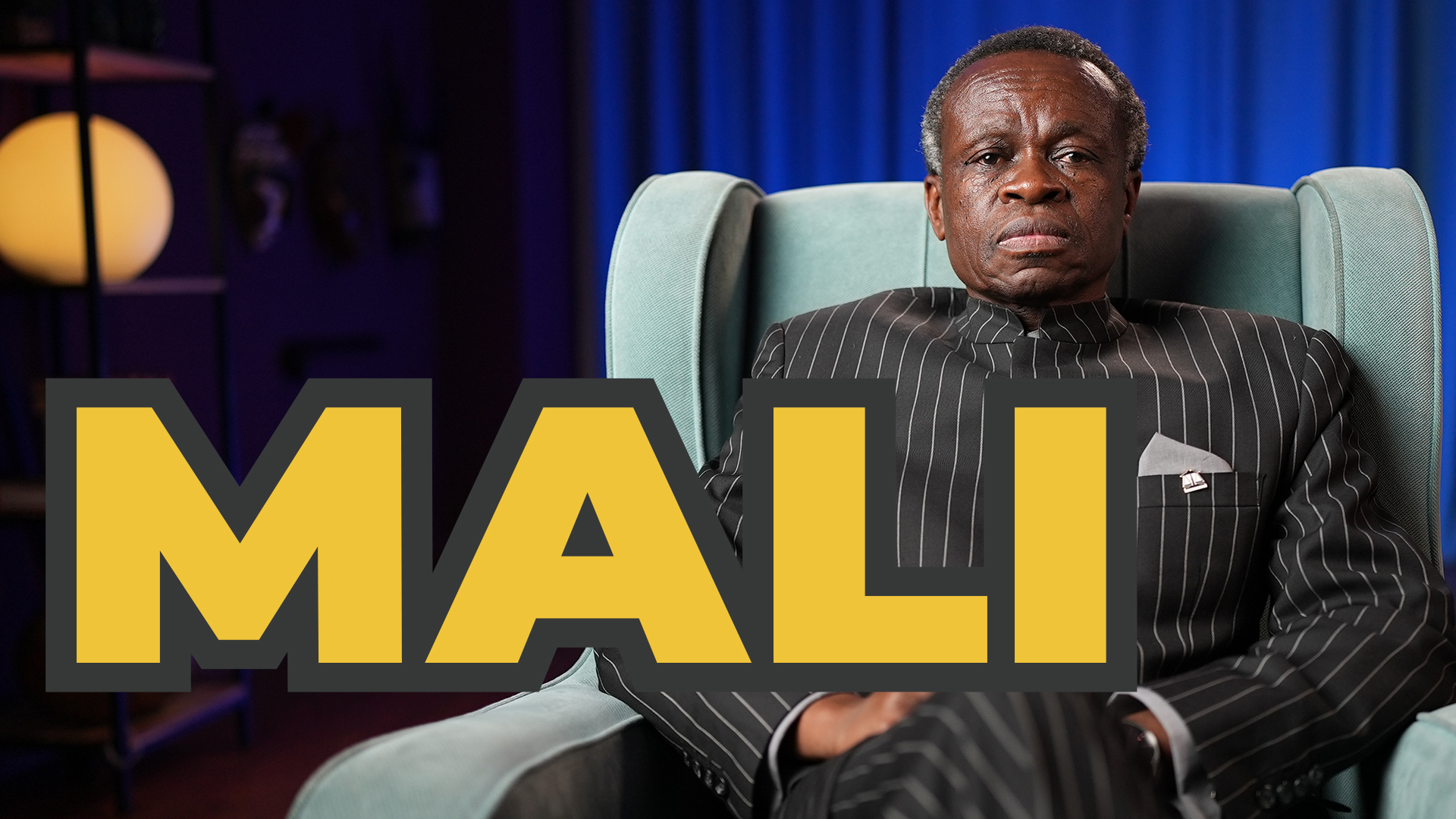

The crisis in Mali is often framed as a story of coups, insurgencies, and internal divisions. But in the latest episode of PLO Lumumba Explain, Prof. PLO Lumumba challenges that narrative — arguing that Mali’s instability cannot be understood without examining the deeper geopolitical forces at play.
According to Lumumba, Mali is not just a troubled state. It is a strategic battlefield in a global contest for resources, influence, and power.
Mali: A Resource-Rich Nation Under Pressure
At the center of the crisis is Mali’s immense natural wealth.
The country sits on significant deposits of uranium and other strategic minerals — resources that are critical for nuclear energy, defense industries, and modern technology. For decades, these resources have attracted the interest of global powers.
Lumumba argues that France, in particular, has historically viewed Mali as a strategic supplier of raw materials, often obtained at extremely low cost.
This economic relationship, he suggests, has contributed to long-term tensions within the country.
The Colonial Legacy That Never Left
To understand modern Mali, Lumumba takes us back to the late colonial period.
Following independence in 1960, Mali initially pursued a path of African unity and socialist orientation under Modibo Keita. However, successive political changes — including military coups and shifting alliances — gradually pulled the country back into the orbit of former colonial powers.
France maintained influence not only through political ties but also through:
- Currency control via the CFA franc
- Military presence in the region
- Economic leverage through resource extraction
According to Lumumba, this “invisible hand” of control never truly disappeared.
The Rise of Instability
Mali’s instability intensified after 2012, when northern separatist groups declared the Republic of Azawad. French military intervention temporarily restored order, but it did not resolve the underlying issues.
Key factors include:
- Marginalization claims by Tuareg communities
- Weak central governance
- Competition over resource control
- Presence of non-state armed groups
Lumumba suggests that while some grievances are legitimate, they are also being amplified and manipulated by external interests.
A New Power Struggle: France vs Russia
One of the most significant developments in recent years is the emergence of Russian influence in the Sahel, particularly through security partnerships.
As Mali, Burkina Faso, and Niger seek to break away from French dominance, they have turned toward alternative alliances.
This shift has created what Lumumba describes as a new geopolitical contest:
- France seeking to maintain its historical influence
- Russia expanding its presence in West Africa
- Local governments attempting to assert sovereignty
In this context, instability becomes a tool.
An unstable Mali, Lumumba argues, can justify continued foreign involvement and delay the country’s full independence over its resources.
The Question of External Involvement
Lumumba stops short of definitive accusations but raises critical questions:
- Who benefits from continued instability?
- Who has the intelligence capacity to coordinate targeted attacks?
- Why do crises intensify when control over resources is contested?
He points to the possibility that separatist movements and insurgent groups may be supported, directly or indirectly, by actors with vested interests.
Whether these claims are fully proven or not, they reflect a broader pattern seen across post-colonial regions.
The Role of Algeria and Regional Actors
Another key player is Algeria, which has positioned itself as a mediator in Mali’s conflicts.
However, Lumumba notes growing skepticism from Mali’s leadership regarding Algeria’s neutrality. This raises concerns about whether regional actors are acting independently or influenced by larger geopolitical forces.
The complexity of the situation underscores the difficulty of achieving lasting peace.
A Fragile Sahel Region
Mali’s crisis is not isolated.
Across the Sahel, a wave of military takeovers and political shifts has reshaped the region:
- Burkina Faso
- Niger
- Guinea
These countries are increasingly coordinating their policies and defense strategies, forming new alliances outside traditional Western frameworks.
At the same time, non-state actors such as extremist groups continue to operate, further complicating the security landscape.
Lumumba warns that without coordinated solutions, instability could spread across borders.
The Need for African-Led Solutions
For Lumumba, the most important takeaway is clear: Africa must take responsibility for its own stability.
He calls for:
- Stronger involvement from the African Union
- Effective diplomacy from ECOWAS
- Inclusive internal dialogue within Mali
- Governance reforms that address marginalization
- Regional cooperation among Sahel states
He emphasizes that military solutions alone will not resolve the crisis.
“Peace,” he suggests, “must be negotiated with justice, inclusion, and realism.”
Conclusion: Beyond Mali
Mali’s situation reflects a broader reality facing many African nations.
The struggle is not only against internal instability but also against external pressures seeking to shape outcomes.
As global powers compete for resources and influence, countries like Mali become critical arenas in a larger geopolitical game.
Lumumba’s warning is direct:
If Africa does not organize, unify, and assert control over its resources, it risks repeating the cycle of dependency and instability.
🎥 Watch the full episode:
👉 https://youtu.be/UA4tZbB4e9w

Leave a Reply