
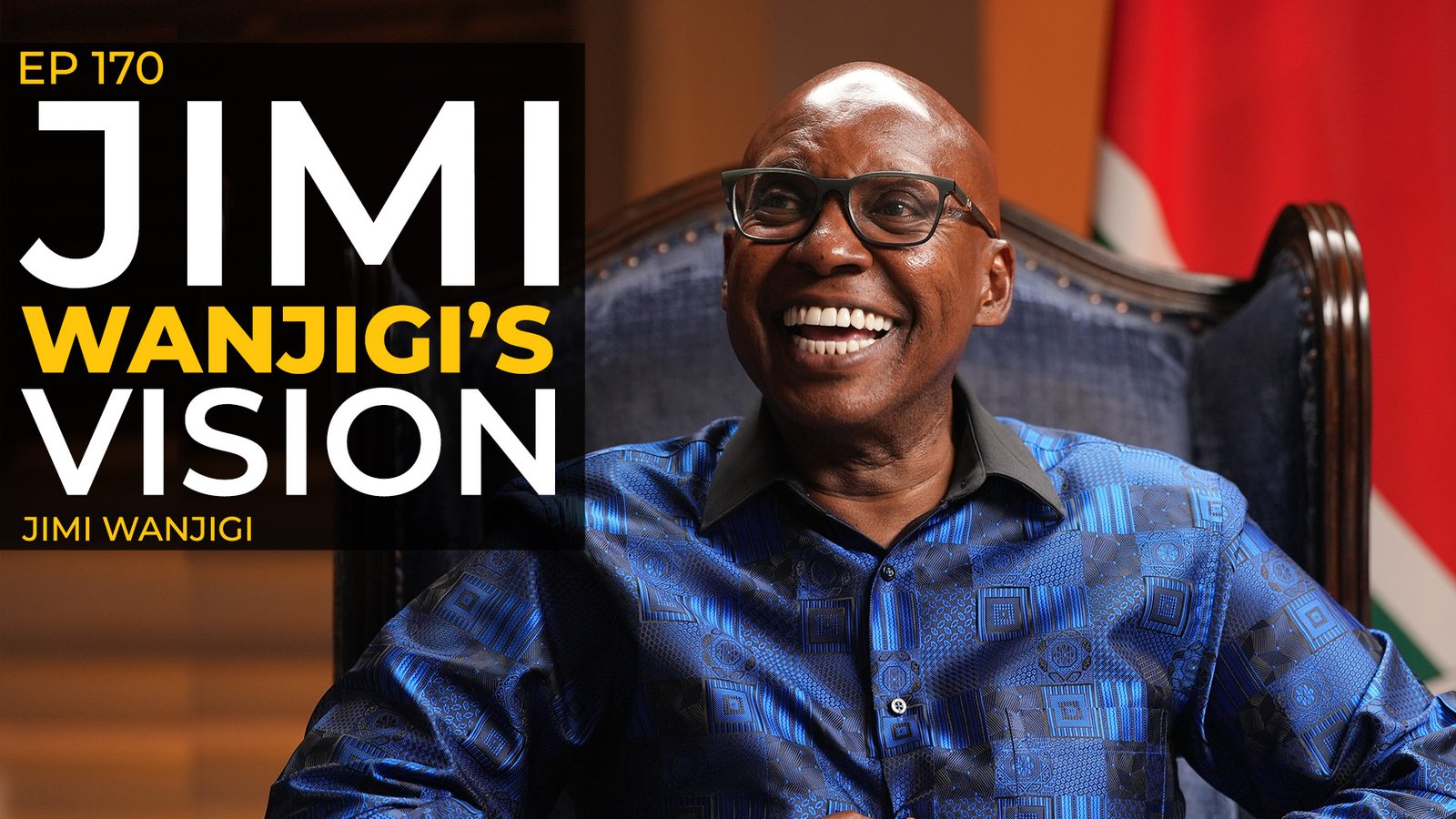

How much does Kenya really owe — and who ultimately benefits when the country continues borrowing?
That was the central question in a powerful Mambo Africa conversation with businessman and politician Jimi Wanjigi, who offered a sharply critical assessment of Kenya’s public debt, government borrowing and the economic system surrounding it.
Wanjigi argues that Kenya’s debt crisis cannot be understood simply by looking at the headline amount the country owes.
For him, the bigger questions are:
Who borrowed the money? Where did it go? What did Kenya receive in return? Who earned from those transactions? And why are ordinary citizens being asked to carry the repayment burden?
It is this relationship between borrowing, political power and financial interests that Wanjigi describes as “Kenya’s debt syndicate.”
Why Does Kenya’s Debt Keep Growing?
Kenya has relied on both domestic and external borrowing for years to finance government expenditure, infrastructure projects and budget deficits.
But Wanjigi questions whether the country has received sufficient economic value from the enormous debt accumulated over successive administrations.
His argument is straightforward: if trillions of shillings have been borrowed in the name of Kenyan citizens, then those citizens should be able to identify the productive assets, jobs and economic growth created by that borrowing.
Instead, many Kenyans continue to face high taxes, unemployment, struggling businesses and a rising cost of living.
This creates what Wanjigi sees as one of the most important questions in Kenya’s economic debate:
Where did the borrowed money go?
Who Benefits When Kenya Borrows?
Wanjigi urges Kenyans to look beyond government statements about debt sustainability and examine the structure behind borrowing itself.
Government debt involves lenders, financial institutions, advisers, intermediaries and numerous other parties.
Wanjigi’s argument is that citizens need significantly greater transparency about how these transactions are negotiated and who benefits from them.
For him, borrowing should not be viewed as an abstract relationship between a government and a lender.
Every loan ultimately creates a repayment obligation that falls on taxpayers.
That means citizens have a legitimate interest in knowing why a loan was taken, the terms attached to it, how the money was spent and what economic return the country received.
Kenya’s Debt Problem Is Also a Tax Problem
The debt conversation quickly becomes a taxation conversation.
Government requires revenue to service existing obligations while simultaneously financing salaries, healthcare, education, infrastructure, security and other public services.
When debt repayments consume an increasing amount of available revenue, pressure grows to raise more money.
For ordinary citizens, that pressure can eventually appear through additional taxation, levies, fees or reductions in government spending.
Wanjigi argues that Kenyans are therefore experiencing the consequences of borrowing decisions that may have been made years earlier.
The question is no longer simply whether Kenya can continue servicing its debt.
It is also:
What is the economic and social cost of doing so?
“If We Borrowed Trillions, Where Is the Transformation?”
One of the strongest ideas arising from Wanjigi’s analysis is the relationship between debt and visible development.
Borrowing itself is not necessarily evidence of economic failure.
Countries can borrow to finance productive infrastructure, industries and investments that create enough economic growth to justify the debt.
The problem arises when the public cannot identify corresponding value.
If massive borrowing produces roads, energy infrastructure, industrial capacity, jobs and higher productivity, then debt can contribute to economic expansion.
But if citizens inherit repayment obligations without corresponding economic assets or opportunities, the legitimacy of that borrowing inevitably comes into question.
Wanjigi therefore challenges Kenyans to evaluate debt not simply by how much was borrowed, but by what the country received for it.
Eurobonds and Kenya’s Borrowing Debate
Kenya’s Eurobond borrowing has become one of the most politically contested parts of the country’s debt history.
For years, questions around the use of borrowed funds, refinancing and repayment have featured prominently in Kenya’s political discourse.
Wanjigi uses the broader debt debate to argue for greater accountability around government borrowing.
His position is that every major debt transaction should be traceable and explainable to the public.
Citizens should know what was borrowed, why it was borrowed, where it was deployed and what measurable benefit resulted.
Transparency, he argues, is especially important because the repayment responsibility does not disappear when governments change.
Future administrations—and future generations of taxpayers—inherit those obligations.
Debt and Kenya’s Cost-of-Living Crisis
For millions of Kenyans, the public debt debate can appear distant from everyday life.
But Wanjigi argues that debt is directly connected to household economics.
When government finances are under pressure, citizens can feel the effects through taxes, expensive credit, reduced disposable income and pressure on public services.
Businesses can also suffer.
Heavy government borrowing from the domestic financial market can compete with private businesses for available credit, while high taxation can reduce the ability of companies to expand and employ more people.
Wanjigi’s larger argument is therefore that the debt crisis cannot be separated from Kenya’s debate about jobs, poverty, entrepreneurship and economic opportunity.
Is Kenya Borrowing to Develop—or Borrowing to Repay Debt?
Another critical question is whether new borrowing is being used to create new productive assets or increasingly to manage obligations accumulated from previous borrowing.
This can create a dangerous cycle.
A government borrows, repayment obligations increase, more revenue is required, and further borrowing becomes necessary to manage the overall budget.
Wanjigi argues that Kenya must eventually break this pattern.
Otherwise, the country risks spending more of its future income servicing decisions made in the past rather than financing the development priorities of the present.
Wanjigi’s Argument for a Different Economic Model
Wanjigi’s criticism extends beyond individual loans or specific administrations.
He argues that Kenya needs to rethink its broader economic model.
For him, the goal should be to build an economy capable of generating wealth rather than continually expanding taxation and borrowing.
That means creating an environment where businesses grow, citizens accumulate wealth, young people find productive opportunities and government becomes less dependent on continually extracting more revenue from a financially pressured population.
Economic liberation, in Wanjigi’s view, therefore requires more than reducing debt.
It requires restructuring the relationship between government and citizens.
Why Poverty Matters in the Debt Conversation
The deepest consequence of economic policy is ultimately measured through the lives of citizens.
Kenya has a young population with enormous entrepreneurial potential, yet unemployment and underemployment remain major political concerns.
Wanjigi argues that an economic system should be judged by whether it expands opportunity.
If debt increases while poverty remains widespread, citizens have every right to ask what purpose the borrowing served.
If taxes increase while businesses struggle to survive, voters should question whether economic policy is producing the right results.
And if young Kenyans see fewer opportunities despite years of government borrowing, then the debt debate inevitably becomes political.
Kenya’s Debt Crisis and the 2027 Election
This is why public debt is likely to become one of the defining economic issues heading towards Kenya’s 2027 General Election.
Candidates will face difficult questions.
How will they reduce the pressure of debt servicing?
Will they continue borrowing?
How will they finance government without continually raising taxes?
What will they do about corruption and wastage?
How will Kenya create jobs and grow the productive economy?
And perhaps most importantly:
How will they prove that every shilling borrowed in the name of Kenyans produces value for Kenyans?
Wanjigi presents himself as offering a fundamentally different economic philosophy from the political establishment.
Whether voters accept that argument will be determined at the ballot box.
But the questions raised in the conversation extend far beyond any single politician.
Kenyans Must Demand Answers About Their Debt
Public debt is ultimately public responsibility.
It will be serviced through revenue generated by Kenyans today and, potentially, by generations that had no role in making the original borrowing decisions.
That makes transparency essential.
Kenyans have a legitimate interest in demanding to know:
How much was borrowed?
From whom?
At what cost?
For what purpose?
Where did the money go?
What did the country receive?
And who benefited from the transaction?
Wanjigi’s central message is that Kenya’s debt debate should no longer be treated as a technical discussion reserved for economists, bankers and government officials.
It is a conversation about the future of every Kenyan.
And as the country moves closer to 2027, the question voters may increasingly ask is not simply how much Kenya owes—but who benefited from putting the country into debt in the first place.
Watch the Full Conversation
🎥 KENYA’S DEBT SYNDICATE: Jimi Wanjigi on Who Benefits From Kenya’s Growing Debt
Watch the complete conversation on THEE ALFA HOUSE / Mambo Africa:
Do you agree with Jimi Wanjigi’s analysis? Who do you believe has benefited most from Kenya’s borrowing—and what should the next government do about the debt crisis?
Share your opinion and join the conversation.

Leave a Reply