
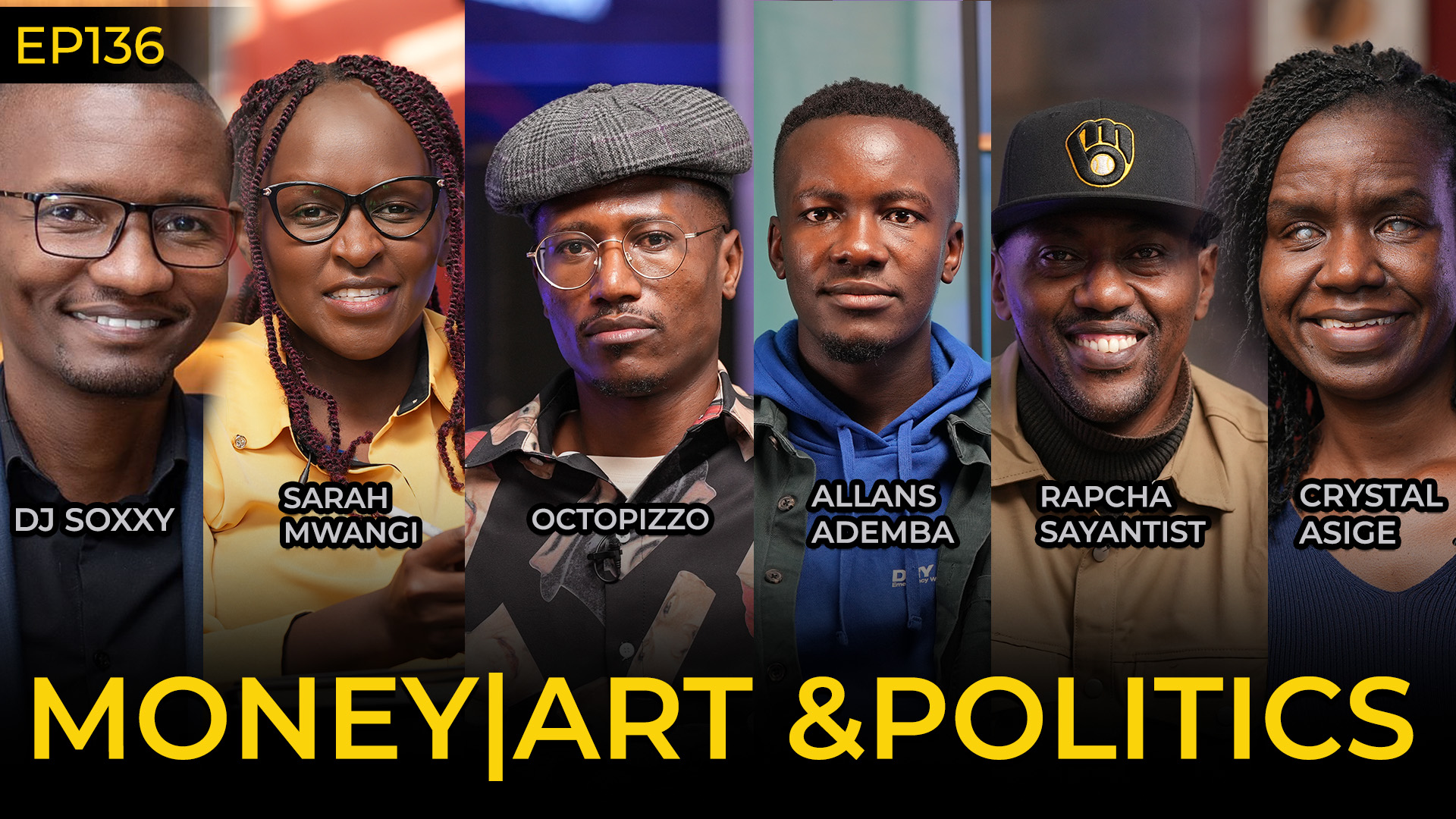

Kenya’s creative industry is increasingly finding itself at the center of political and social discourse. In a powerful and wide-ranging conversation hosted by THEE ALFA HOUSE, leading voices from music, media, and politics came together to tackle one critical question: what role should artists play in shaping the nation’s future?
The discussion featured prominent figures including Octopizzo, Rapcha, Chrystal Asige, DJ Soxxy, Ademba Allans, and Sarah Mwangi — each bringing a unique perspective on the intersection of art, politics, and economic survival.
The Pressure on Artists: Too Much Responsibility?
One of the central themes of the conversation was the growing expectation placed on artists to act as political voices.
Octopizzo pushed back against this pressure, arguing that society often demands too much from creatives while failing to hold itself accountable.
Artists are expected to fix society — but society itself is not doing its part.
His position highlights a growing frustration among creatives who feel they are being turned into political messengers without the support structures needed to sustain their craft.
Financial Freedom vs Creative Independence
For Rapcha, the issue is deeper than expression — it’s about survival.
He emphasized that financial independence is essential for artistic freedom, noting that artists who depend on external funding or influence may struggle to remain authentic.
If an artist is not financially free, their voice can easily be controlled.
This perspective sheds light on a critical reality in Kenya’s creative economy: many artists operate under financial pressure, making it difficult to separate art from influence.
Principles, Influence & Responsibility
DJ Soxxy added another dimension to the conversation, stressing the importance of personal values in creative work.
According to him, artists must define their principles clearly if they want to navigate political and social spaces without losing their identity.
This raises a broader question:
Can artists engage in politics without compromising their authenticity?
Youth, Leadership & Political Participation
The conversation shifted significantly when Chrystal Asige addressed the role of young people in shaping Kenya’s future.
Her message was clear:
If young people want change, they must step into leadership.
She challenged the idea that transformation can happen without direct political participation, urging youth to move beyond commentary and into action.
The Rise of Civic Movements
Ademba Allans reinforced this point by highlighting the growing momentum behind civic initiatives like the “Tuko Kadi” campaign, which encourages youth voter registration.
The movement represents a shift from passive frustration to active engagement — a sign that young Kenyans are beginning to organize and challenge the system more strategically.
Art as a Mirror of Society
At its core, the debate reaffirmed a timeless idea:
art reflects society.
But in Kenya today, that reflection is increasingly political — and sometimes uncomfortable.
Artists are being criticized for speaking too loudly, while others are criticized for staying silent. This tension underscores the evolving role of creatives in a country navigating economic challenges, political division, and generational change.
A New Cultural-Political Landscape
The discussion also touched on platforms like Baraza Media Lab, which are creating spaces for dialogue between creatives and policymakers — bridging the gap between expression and governance.
This signals a growing recognition that culture and politics are no longer separate spheres.
Conclusion: Who Shapes the Future?
The conversation leaves Kenya with a critical question:
Should artists lead societal change — or should they simply reflect it?
As the country approaches the 2027 elections, one thing is clear:
the intersection of politics, art, and money will play a defining role in shaping Kenya’s future.
And whether through music, media, or activism, the voices of creatives will remain impossible to ignore.

Leave a Reply