
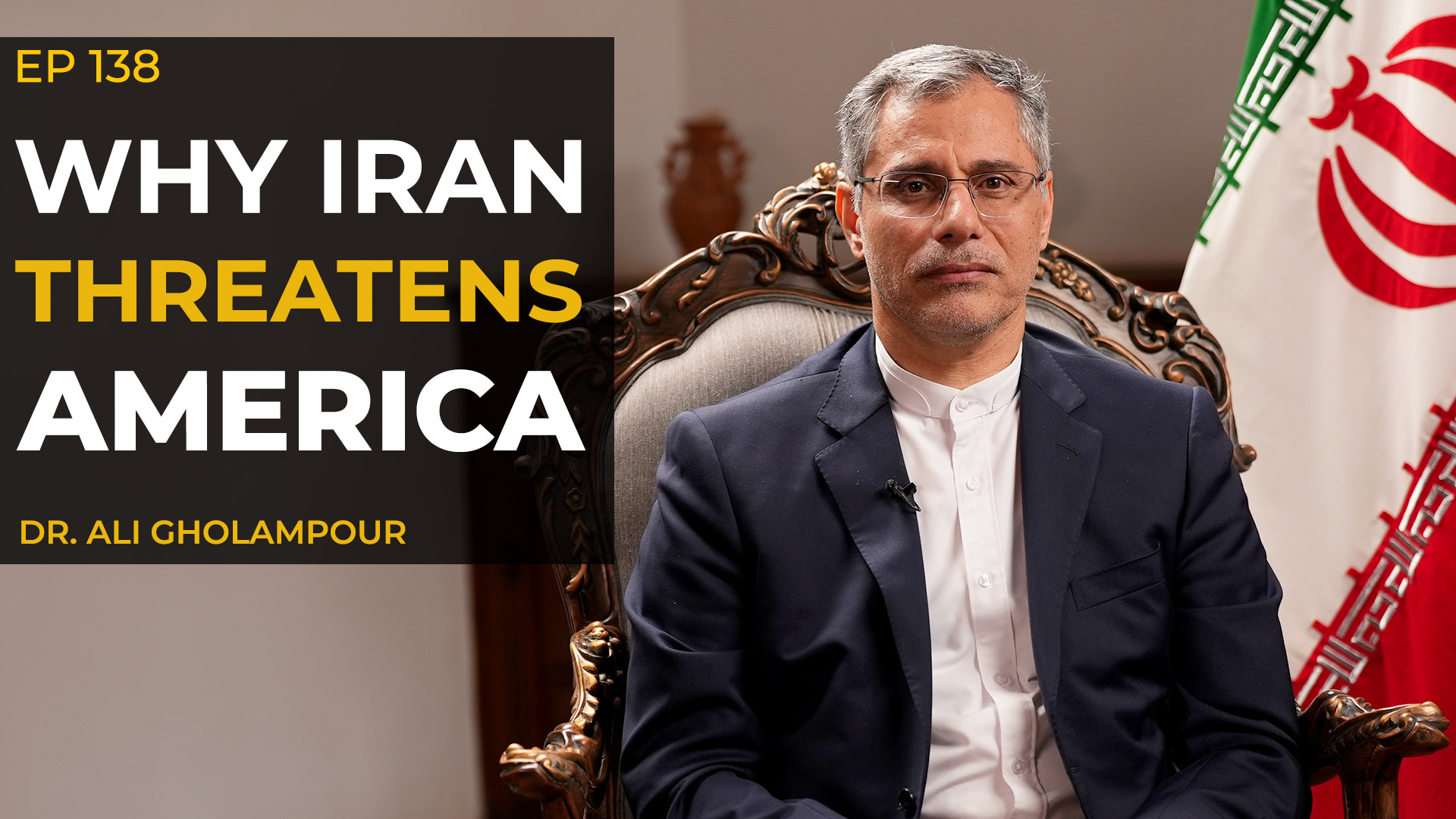

Iran’s Message to the World: Sovereignty Is Not Negotiable
In a powerful and timely conversation on Mambo Africa, Iranian Ambassador to Kenya Dr. Ali Gholampour addressed the rising tensions involving Iran, the United States and Israel, defending Iran’s position as one rooted in sovereignty, self-defense and international law.
Speaking from the Iranian Embassy in Kenya, Dr. Gholampour said Iran does not view the current situation as a war initiated by Tehran, but as a response to what he describes as military aggression by the United States and Israel against a sovereign nation.
According to the ambassador, Iran has historically acted defensively and does not seek to attack other nations. However, he insisted that when Iran’s territorial integrity, sovereignty and security are threatened, the country will defend itself decisively.
Kenya-Iran Relations and Africa’s Importance
Before diving into the geopolitical tensions, Dr. Gholampour reflected on Kenya’s importance to Iran and the wider region.
He described Kenya as a major diplomatic and multilateral hub in Africa, noting its role in hosting United Nations offices, peace-building initiatives, international conferences and regional diplomacy. He said Iran considers Kenya a priority partner in Africa because of its strategic location, growing international influence and potential for trade, investment and cultural cooperation.
The ambassador said Iran and Kenya share historical ties and that both countries, as part of the Global South, have opportunities to deepen cooperation in agriculture, trade, health, tourism, technology and diplomacy.
Multilateralism vs Unilateral Power
A central theme of the interview was the ambassador’s criticism of what he called growing unilateralism by the United States.
Dr. Gholampour argued that the global order established after the Second World War through the United Nations Charter is being weakened by powerful states that act outside multilateral frameworks. He accused the US of pursuing foreign policy in a way that prioritizes American interests while ignoring the consequences for other countries.
He said this approach affects not only the Middle East but also Africa, Latin America, Europe and Asia, especially through trade, sanctions, military pressure and control over strategic resources.
“This Is Aggression, Not War”
On the Iran-US-Israel confrontation, the ambassador was clear: Iran considers itself the victim of aggression.
He argued that the United States and Israel violated international law, the sovereignty of Iran and principles of the UN Charter by attacking Iranian territory. According to him, Iran’s response is not an offensive war but a lawful act of self-defense.
Dr. Gholampour said Iran has never sought to invade or occupy other countries, insisting that its military capability is designed to defend the nation against attacks.
Why Iran Says Israel Is Expansionist
The ambassador also strongly criticized Israel, which he repeatedly referred to as the “Zionist regime.”
He argued that Israel’s policy is rooted in occupation, discrimination and expansionism. He connected Iran’s position on Israel to the wider Palestinian question, saying that resistance movements in Palestine, Lebanon and other parts of the region emerged in response to occupation.
Dr. Gholampour rejected the description of groups such as Hezbollah and Hamas as terrorists, arguing instead that they are resistance movements formed to fight occupation and defend their people.
Iran’s Nuclear Program and the NPT Debate
One of the key issues addressed in the interview was Iran’s nuclear program.
The ambassador rejected claims that Iran is developing nuclear weapons, saying Iran’s nuclear activities are peaceful and monitored under international frameworks. He said Iran is a member of the Treaty on the Non-Proliferation of Nuclear Weapons (NPT) and that the International Atomic Energy Agency has carried out extensive inspections in Iran.
According to Dr. Gholampour, accusations against Iran’s nuclear program are political. He argued that if Iran has obligations under the NPT, it also has rights — including the right to peaceful nuclear energy, scientific research, health applications and agricultural uses.
“Preemptive Attack Has No Place in International Law”
Dr. Gholampour dismissed the idea that Iran can be attacked preemptively based on suspicion.
He said preemptive military action has no legitimate place in international law, arguing that countries cannot attack others merely because they imagine a future threat.
In his view, the only lawful uses of force are those authorized by the United Nations Security Council or actions taken in genuine self-defense after an actual attack.
Trump, Netanyahu and the Question of Pressure
The ambassador was sharply critical of Donald Trump and Israeli Prime Minister Benjamin Netanyahu.
He said Trump damaged America’s global credibility by abandoning diplomacy, weakening the US image, and aligning too closely with Israel’s agenda. He also described Netanyahu as a leader facing political and legal pressures at home and internationally.
Dr. Gholampour argued that Trump’s withdrawal from the Iran nuclear deal destroyed trust and made future negotiations more difficult.
The Strait of Hormuz: Open, But Under Conditions
The conversation also focused heavily on the Strait of Hormuz, one of the world’s most important oil transit routes.
Dr. Gholampour reassured Kenya and the world that the Strait of Hormuz remains open for trade and business. However, he said Iran has the right to manage passage through the route because it lies within Iranian territorial waters.
He explained that Iran has not blocked the route but has introduced coordination requirements for vessels passing through, especially given the security situation. He said countries with friendly relations, including Kenya, are not targeted — but ships linked to hostile actors such as the US or Israel would not be treated in the same way.
Kenya’s Position and Iran’s Discomfort
When asked about Kenya’s response to the conflict, Dr. Gholampour said Iran felt uncomfortable with statements that appeared to condemn Iran while failing to condemn the aggressors.
He said Iran expected countries that value international law to condemn military aggression first, especially when a sovereign country is attacked. However, he also acknowledged that Kenya and Iran continue to enjoy friendly relations.
The ambassador emphasized that Iran does not wish harm on other countries and understands the global economic impact of tension in the Persian Gulf, especially on fuel prices and trade.
US Sanctions as “Economic Terrorism”
One of the strongest statements in the interview came when Dr. Gholampour described US sanctions against Iran as economic terrorism.
He argued that sanctions do not only affect governments; they hurt ordinary people by restricting access to trade, banking, medicine, equipment, education, development and essential goods.
According to the ambassador, sanctions are designed to pressure Iran economically, but they also violate the rights of ordinary citizens by cutting them off from opportunities and services.
Can Iran Sustain a Long Conflict?
Asked whether Iran could sustain a prolonged confrontation similar to the Russia-Ukraine conflict, Dr. Gholampour said Iran is a resilient country.
He pointed to Iran’s history of enduring war, sanctions and external pressure, saying the country has survived difficult periods while still making progress in science, medicine, agriculture, technology and defense.
However, he also stressed that Iran does not seek prolonged war and remains open to diplomacy if aggression stops, sanctions are removed, and guarantees are given.
Iran’s Conditions for Ending Hostilities
Dr. Gholampour outlined several conditions Iran believes are necessary for peace.
These include:
- An end to military aggression
- Guarantees that attacks will not happen again
- Recognition of Iran’s rights under the NPT
- Removal of sanctions
- Compensation for damage caused by attacks
- Respect for Iran’s sovereignty and security
He said Iran is ready for dialogue, but not surrender.
Africa’s Role: Defend Sovereignty and International Law
The ambassador had a clear message for Africa: defend sovereignty.
He urged African countries to oppose violations of international law and to resist unilateral pressure from powerful states. He said Africa must learn from the Persian Gulf crisis and understand that security cannot simply be bought from external powers.
On foreign military bases in Africa, Dr. Gholampour warned that such bases primarily serve the interests of the countries that own them, not necessarily the host nations.
His message was that African countries must think carefully about sovereignty, security and independence in a world where global powers often pursue their own interests.
Iran and Africa: Trade, Tourism and Health Cooperation
Beyond geopolitics, the ambassador spoke warmly about Iran’s relationship with Africa and Kenya.
He said Iran and Kenya can cooperate more in trade, agriculture, health, tourism and culture. He highlighted Iran’s health sector, saying Iran offers advanced and affordable healthcare services, including in areas like cancer treatment and surgery.
Dr. Gholampour also mentioned tourism, saying Iran is open to Kenyan visitors and that Iranian tourists have shown growing interest in Kenya.
He also called for more cultural exchange, including food festivals and deeper engagement between the two nations.
Conclusion: A Call for Sovereignty, Diplomacy and Respect
Dr. Ali Gholampour’s message throughout the interview was consistent: Iran will not bow to pressure from Trump, Netanyahu, the United States or Israel.
He said Iran wants peace, trade, diplomacy and cooperation — but not at the expense of sovereignty, security and national dignity.
For Africa, the conversation raises a broader question:
Should African countries remain passive in global power struggles, or should they take a stronger stand in defense of sovereignty and international law?
As tensions in the Persian Gulf continue to affect global fuel prices, trade routes and diplomatic alignments, this interview offers a rare perspective from Iran’s official representative in Kenya — and a reminder that global conflicts are never as far away as they seem.
Watch the full episode on THEE ALFA HOUSE.

Leave a Reply