
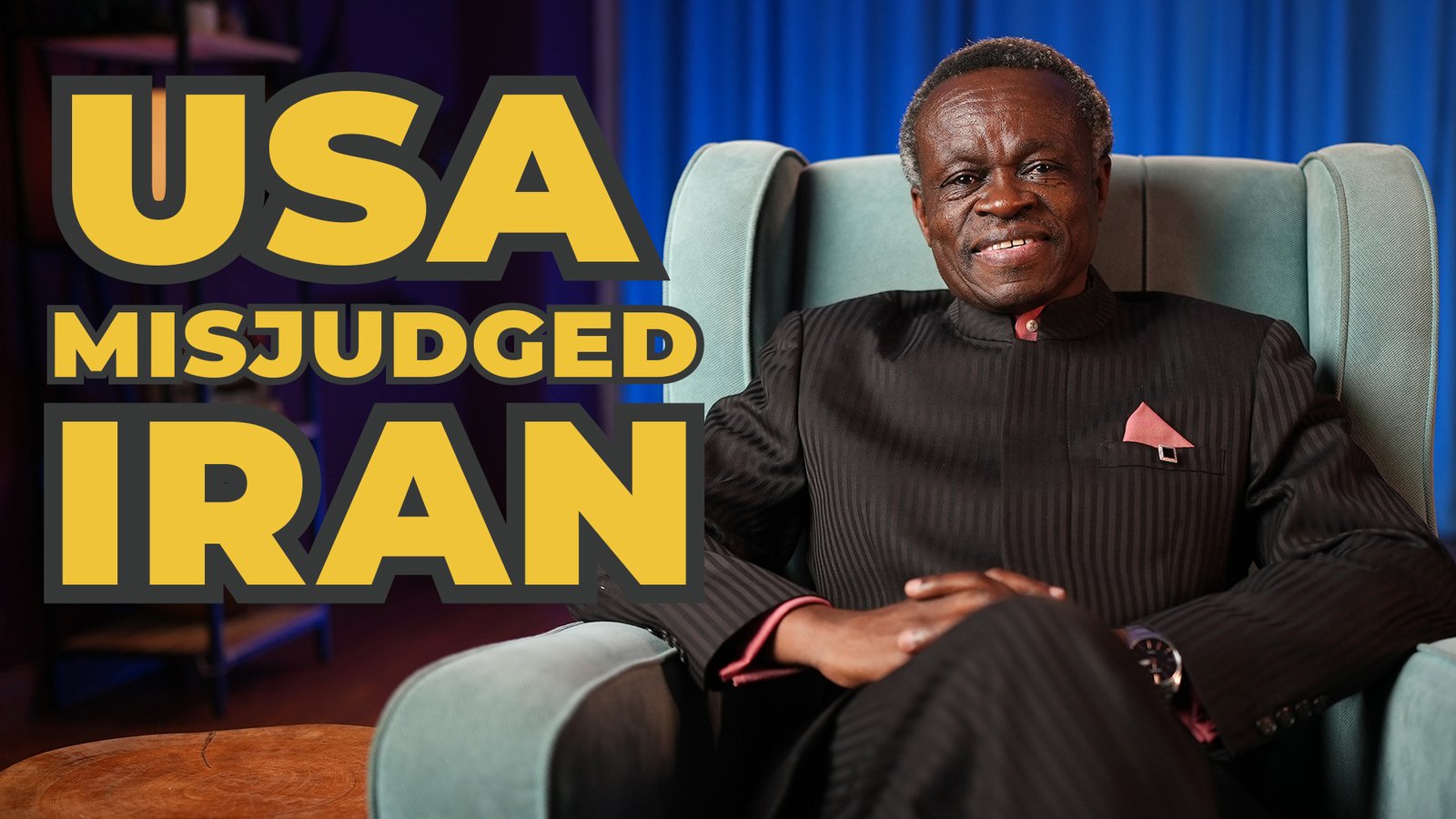

In this powerful episode of PLO Lumumba Explain, Prof. PLO Lumumba offers a sharp geopolitical analysis of the ongoing conflict involving Iran, Israel and the United States. His central argument is bold: Iran may not be “winning” in the conventional sense of occupying territory or defeating armies, but it is gaining ground morally, strategically, economically and diplomatically.
According to Lumumba, the United States and Israel underestimated Iran. They assumed that military pressure, sanctions, targeted strikes and diplomatic isolation would bring Iran to its knees. Instead, Iran has demonstrated resilience — and in doing so, has exposed the wider stakes behind the war.
This is not simply a Middle East conflict. It is a struggle over oil, the Strait of Hormuz, the US dollar, China’s energy supply, BRICS and the future of global power.
Watch the full episode here:
👉 https://youtu.be/9T81hnK2IFE
Iran Was Expected to Collapse — But It Did Not
Lumumba argues that the US and Israel misread Iran’s internal strength.
The expectation was that sustained pressure would weaken the Iranian state, create internal collapse, or trigger regime change. But Iran, according to Lumumba, has remained organized and prepared.
This resilience has turned the war into something much more complicated than Washington or Tel Aviv may have anticipated.
Iran has not been bombed into submission.
Iran has not collapsed politically.
Iran has not surrendered diplomatically.
Instead, Iran has used its geography, regional alliances and energy position to create pressure on the global system.
The Strait of Hormuz: Iran’s Strategic Advantage
One of the most important points in Lumumba’s analysis is the role of the Strait of Hormuz.
This narrow maritime route is one of the most important oil chokepoints in the world. If movement through Hormuz is disrupted, the effects are felt globally — from Asia to Europe, from Africa to the United States.
Lumumba suggests that Iran’s leverage over Hormuz gives it power far beyond its military capacity.
The conflict is therefore not only about missiles and military bases. It is about:
- Oil routes
- Global shipping
- Energy prices
- Insurance costs
- Supply chains
- Industrial production
- Inflation and consumer hardship
When Hormuz shakes, the world economy shakes with it.
The War Is Also About the Dollar
Lumumba connects the conflict to the deeper question of the US dollar and global financial dominance.
For decades, the dollar has remained central to global trade, especially through oil transactions. But the rise of BRICS, alternative trading arrangements and growing dissatisfaction with Western financial control have created new pressure on the dollar system.
In this context, control of oil is not just economic — it is geopolitical.
If the United States loses influence over global oil flows, it risks losing part of the foundation of its financial power.
Lumumba argues that the war must therefore be understood as part of a larger attempt to protect American dominance in a changing world.
Is China the Hidden Target?
Another major part of Lumumba’s argument is that China may be one of the hidden targets of the conflict.
China depends heavily on imported energy. If oil supply routes become unstable, China’s economy faces pressure. Manufacturing costs rise. Shipping becomes more expensive. Goods become less competitive.
By disrupting oil flows through the Middle East, the United States may also be indirectly targeting China’s economic rise.
Lumumba suggests that the conflict is not only about Iran or Israel. It is part of a larger contest between the United States and emerging powers — especially China.
The battlefield may be in the Middle East, but the consequences reach Beijing, Moscow, New Delhi, Brussels, Washington and beyond.
Israel’s Role and the Power of the Lobby
Lumumba also examines why Israel remains so central in US foreign policy.
He argues that the Jewish lobby in the United States has historically ensured that Israel remains at the top of American foreign relations. This influence, he says, has shaped US policy in the Middle East for decades.
In his view, Benjamin Netanyahu represents one of the strongest expressions of modern Zionist expansionism — focused on domination, survival through war and regional control.
Lumumba describes Israel as increasingly becoming a war economy — a state whose leadership survives through permanent conflict.
For Netanyahu, war is not only a security matter. It is political survival.
Netanyahu and the Logic of Permanent War
Lumumba argues that Netanyahu cannot easily govern without conflict.
If the war ends, difficult questions emerge:
- Why were Israeli defenses breached?
- Why are Israelis dying?
- Why is Israel increasingly isolated globally?
- Why has the region become more unstable?
- Why does the government continue expanding conflict fronts?
For Lumumba, war allows Netanyahu to externalize crisis. It gives his administration a reason to remain in power and avoid internal accountability.
This, he argues, is one of the dangers of the current situation: leaders may continue war not because it solves problems, but because it delays political collapse.
America’s Problem: The War Is Unpopular
Lumumba also notes that the war is increasingly unpopular inside the United States.
Many Americans are tired of endless foreign wars. They are questioning why the United States continues to spend money, weapons and diplomatic capital on conflicts that do not clearly benefit ordinary citizens.
At the same time, the economic consequences of war are becoming harder to ignore.
Rising energy prices, higher costs of goods and pressure on global trade could affect voters directly. This makes the conflict politically risky for any American administration.
Lumumba suggests that the longer the war continues, the more difficult it becomes for the United States to justify its involvement.
Iran’s Moral and Propaganda Advantage
One of Lumumba’s strongest claims is that Iran has gained the moral and propaganda advantage.
Why?
Because Iran can present itself as a country under aggression. It can argue that it is defending itself against two powerful military actors: Israel and the United States.
This gives Iran a powerful narrative in the Global South, where many people already distrust Western military interventions.
To many observers, the war appears less like a defensive action and more like another example of Western domination, selective international law and geopolitical bullying.
That, Lumumba argues, is why Iran is winning in the arena of global perception.
The Russia–Ukraine Connection
Lumumba also connects the Iran conflict to the Russia–Ukraine war.
He argues that Ukraine has become a proxy battlefield prolonged by European powers, especially those seeking to weaken Russia. In his view, Europe miscalculated Russia in much the same way that the US and Israel miscalculated Iran.
Both conflicts reveal the same global pattern:
- Western powers underestimate their opponents
- Wars become longer than expected
- Sanctions fail to produce total collapse
- Global markets suffer
- Diplomacy becomes harder
- The world moves closer to multipolarity
For Lumumba, these wars are not isolated. They are part of a broader global struggle over dominance.
The Bigger Picture: A Changing World Order
At the heart of Lumumba’s argument is the decline of the old world order.
The United States still wants to remain the global hegemon.
Israel wants to remain the dominant military power in the Middle East.
Europe wants to retain influence despite declining power.
Russia refuses to be weakened.
China continues to rise.
BRICS challenges the financial architecture built around the West.
Iran sits at the intersection of these forces.
That is why the conflict matters so much.
It is not only about Tehran.
It is about the future of global power.
Conclusion: Iran Is Still Standing
Lumumba’s conclusion is not that Iran has defeated the United States or Israel in a traditional military sense.
His point is deeper.
Iran is winning because it has survived.
Iran is winning because it has exposed the limits of military intimidation.
Iran is winning because it has turned geography into strategy.
Iran is winning because the war is damaging the global economy.
Iran is winning because the US and Israel are facing political, moral and diplomatic pressure.
This conflict has revealed that power in the modern world is no longer defined only by bombs and armies. It is also defined by energy routes, currencies, alliances, narratives and economic resilience.
As PLO Lumumba explains, the war against Iran may have been designed to weaken Tehran — but it may end up weakening the very global order that launched it.
📺 Watch the full episode:
👉 https://youtu.be/9T81hnK2IFE

Leave a Reply