
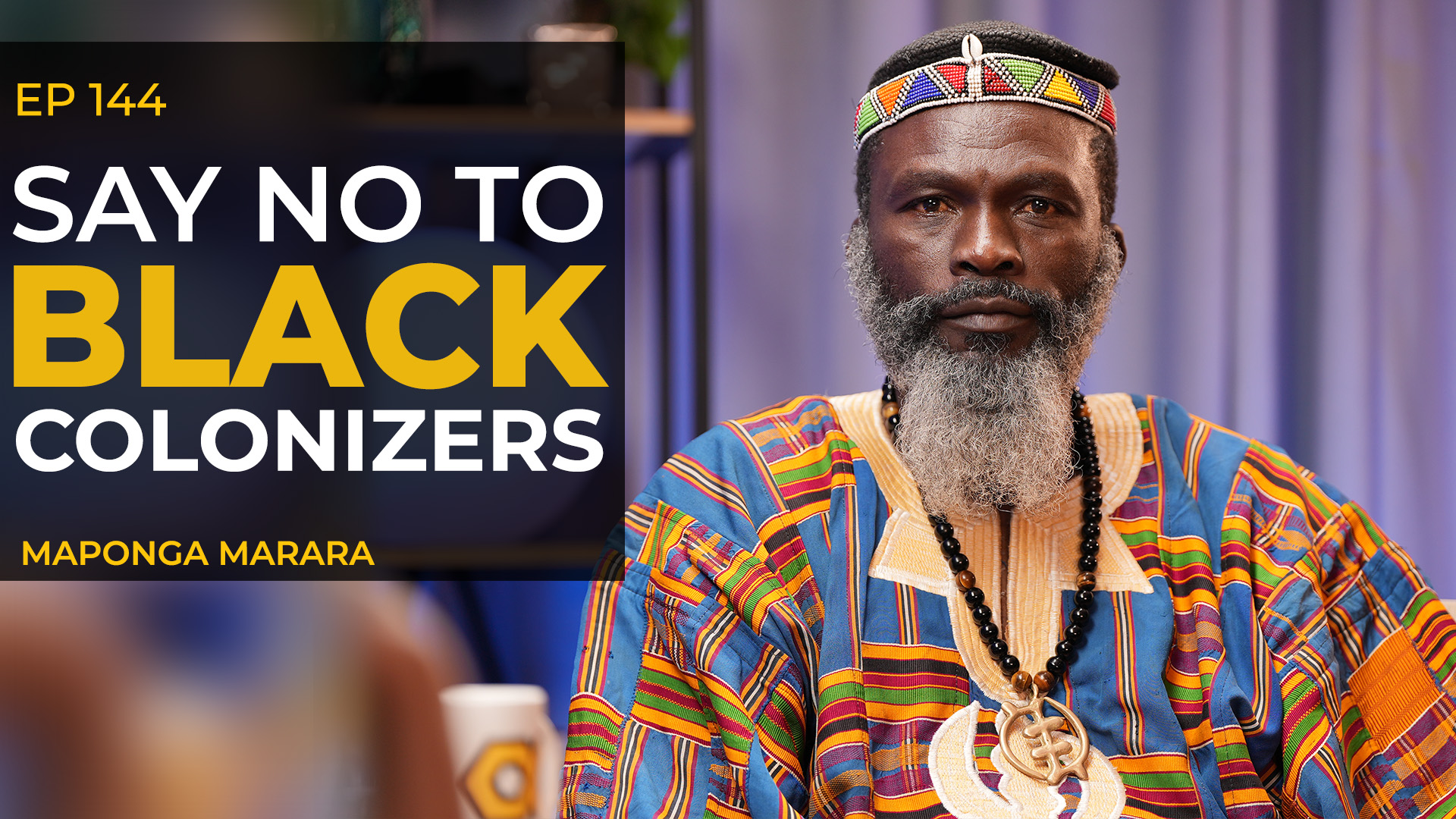

Zimbabwean Pan-Africanist and cultural philosopher Maponga Marara has delivered one of his strongest critiques yet of Western influence in Africa, accusing former colonial powers of continuing to exploit the continent through political influence, economic dependency and mental colonization.
Speaking during a powerful conversation on Fanya Mambo Africa with Sarah Mwangi, Maponga argued that Africa cannot achieve true liberation while continuing to operate under colonial systems designed to benefit foreign powers rather than African people.
Watch full interview here:
https://youtu.be/-uEMYIRtiEc
“Pan-Africanism Is Not Enough”
Maponga opened the discussion by explaining the evolution of Pan-Africanism and why he believes Africa must now move toward what he calls “Pan-African nationalism.”
According to him, Pan-Africanism historically emerged as a response to slavery and colonialism, helping Africans reconnect with their identity and history. However, he believes the continent now faces a deeper challenge: building African-controlled systems capable of sustaining economic, political and cultural independence.
He argued that African nations still operate using colonial governance structures, educational systems and economic models imposed during colonial rule.
“We cannot run Africa with colonial software,” Maponga said during the interview.
According to him, Africa continues to copy Western capitalism, socialism and governance systems without developing structures rooted in African realities and values.
Colonialism of the Mind
A major theme throughout the conversation was mental colonization.
Maponga argued that African education systems continue teaching Africans to admire Western systems while neglecting African history, science, culture and identity.
He questioned why African youth are often taught to see Europe and America as symbols of success while African solutions remain marginalized.
According to him, real liberation begins with transforming consciousness.
He challenged Africans to rethink:
- Education systems
- Religion
- Healthcare systems
- Architecture
- Fashion
- Governance
- Economic systems
- Technology
- Cultural identity
Maponga insisted that African consciousness must move beyond slogans into practical ownership and participation in African economies and institutions.
“The West Are Parasites”
One of the strongest moments in the interview came when Maponga described Western powers as “parasites” feeding off Africa’s resources.
He accused Europe and the United States of benefiting from stolen African wealth while presenting themselves as global powers.
According to him, African civilizations historically possessed advanced systems of governance, science, trade and architecture long before European colonization.
He referenced civilizations such as:
- Great Zimbabwe
- Egypt
- Carthage
- Mali Empire
- Benin Kingdom
- Congo Kingdom
- Ethiopia
Maponga argued that Africa’s decline accelerated after colonial intervention disrupted indigenous systems and extracted wealth from the continent.
“They are not colonizers. They are parasites,” he declared.
Macron, France and Africa
The conversation took a particularly controversial turn when Sarah Mwangi asked Maponga about Kenyan President William Ruto hosting French President Emmanuel Macron in Kenya.
Maponga strongly criticized France’s historical role in Africa, especially in West African countries previously under French colonial influence.
He accused France of continuing to economically dominate parts of Africa through monetary systems, political influence and strategic control over African economies.
According to Maponga, African leaders should critically examine partnerships with Western powers rather than celebrating them without questioning historical exploitation.
He questioned why African leaders continue depending on Europe for development financing while Africa itself possesses enormous resources and economic potential.
African Unity and Agenda 2063
Maponga also criticized what he described as the slow implementation of African unity initiatives.
While African leaders frequently speak about Agenda 2063 and continental integration, he argued that very little practical progress has been achieved.
He questioned why Africa still lacks:
- A single African currency
- An African passport
- A unified African banking system
- Strong continental trade systems
- A united African political agenda
According to him, African leaders spend too much time discussing unity instead of implementing it.
“Stop telling us what you are going to do. Just do it.”
Youth Protests and Revolutionary Leadership
The interview also addressed growing youth frustration across Africa, including protests seen in Kenya, Mozambique and other countries.
Maponga acknowledged that many young Africans are demanding change but warned that replacing leaders without transforming systems would solve little.
He argued that true transformation requires:
- Changing governance systems
- Rebuilding African consciousness
- Reforming education
- Transforming economic structures
- Creating African-centered development models
According to him, many African politicians simply inherited colonial systems and continued using them against their own people.
Xenophobia and South Africa
The conversation further explored the anti-migrant tensions currently affecting South Africa.
Maponga argued that the issue is more economic than cultural, claiming that businesses benefit from undocumented migrant labor because it is cheaper and easier to exploit.
He suggested that many protests labeled as xenophobia are connected to larger economic struggles involving ownership, unemployment and informal trade competition.
However, he also condemned violence against fellow Africans and emphasized the importance of African unity.
Africa Must Rediscover Itself
Throughout the interview, Maponga repeatedly returned to the idea that Africa must rediscover itself culturally, spiritually and politically.
He argued that African societies once possessed systems capable of governing communities sustainably before colonial disruption.
According to him, Africa’s future depends on reclaiming:
- African identity
- Indigenous knowledge
- Cultural confidence
- Spiritual systems
- Economic ownership
- Political independence
The discussion ended with a call for Africans — especially young people — to stop waiting for foreign powers to shape Africa’s future and instead build systems rooted in African realities and aspirations.
Watch the full episode featuring Maponga Marara on Fanya Mambo Africa with Sarah Mwangi here:
https://youtu.be/-uEMYIRtiEc

Leave a Reply