
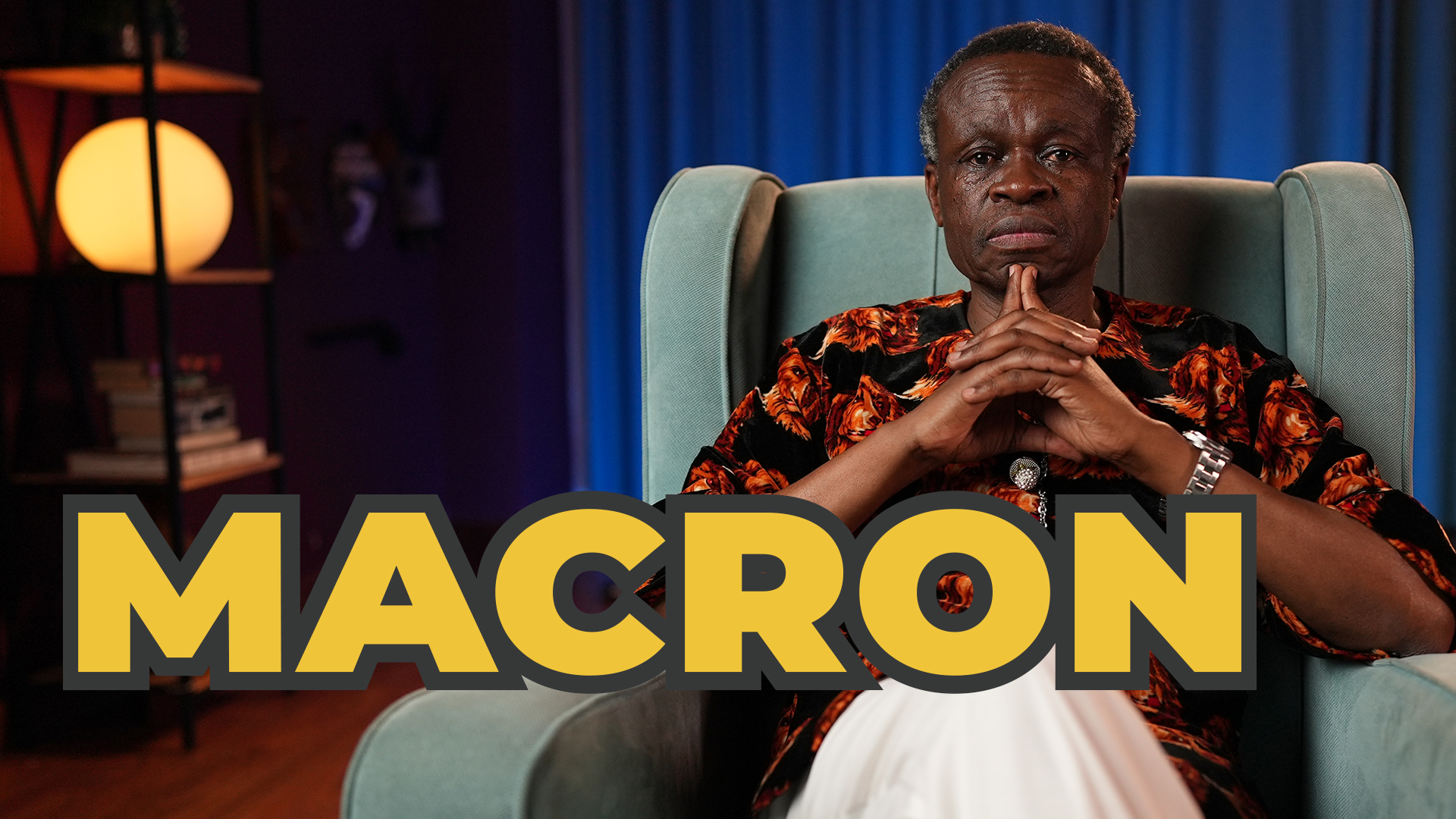

In this powerful episode of PLO Lumumba Explain, Prof. PLO Lumumba delivers a sharp warning about France’s renewed diplomatic and economic push into Africa — especially through Kenya, Angola, South Africa and other countries that were not part of France’s old colonial empire.
At the center of Lumumba’s argument is a simple but urgent question:
Is France building a genuine partnership with Africa — or is Françafrique returning under a new name?
Lumumba argues that President Emmanuel Macron’s current Africa strategy must be understood through history, economics and geopolitics. France is losing influence in parts of the Sahel, including Mali, Burkina Faso and Niger, where governments have rejected French military presence, French currency influence and French mining companies. In response, Lumumba says, Macron is turning toward former British and Portuguese colonies such as Kenya, Angola and South Africa.
France’s Old Colonial Logic Never Disappeared
Lumumba traces France’s Africa policy back to the colonial era.
He refers to the Brazzaville Conference of 1944, where France made clear that its survival depended on retaining influence over its colonies. Later, in 1958, French colonies were offered a “yes” or “no” vote: autonomy while remaining tied to France, or full independence outside French control. Guinea voted no and paid a heavy price.
After independence, France retained powerful tools of influence in many former colonies:
- Military presence
- Currency control through the CFA franc
- Economic influence from Paris
- Political and diplomatic pressure
- Corporate penetration in strategic sectors
For Lumumba, this was not independence in the full sense. It was a continuation of control through new instruments.
Why Macron Is Looking Beyond Francophone Africa
France’s old grip is weakening. Lumumba points to resistance in the Sahel, where countries have rejected French troops, French currency influence and French mining interests. As France loses space in Mali, Niger, Burkina Faso, Senegal, Gabon and beyond, Macron is looking for new openings.
That is why Kenya becomes important.
Kenya is not a former French colony. It is English-speaking, strategically placed, and economically dynamic within East Africa. Lumumba says Kenya offers France access to the wider Horn of Africa, the Indian Ocean, regional markets, skilled labor and energy potential. He notes Kenya’s geopolitical importance through Nairobi’s role as a major United Nations hub and as a gateway into Eastern Africa.
This is why, in Lumumba’s view, France is moving deeper into Kenya.
Françafrique With a Softer Face?
Lumumba explains that the old model of French control was military, monetary and openly political. The new model appears softer.
France now speaks the language of:
- Technology
- Artificial intelligence
- Energy
- Environment
- Logistics
- Corporate partnership
- Military cooperation
But Lumumba questions whether this is truly soft diplomacy. He describes Macron’s approach as “iron fist with velvet gloves” — a diplomacy that speaks softly while still carrying strategic power.
France may say it is offering partnership, but Lumumba urges Africans to ask: partnership on whose terms?
Kenya Must Define What It Wants
One of Lumumba’s strongest warnings is directed at Kenya.
He says Kenya should not simply celebrate hosting the France-Africa meeting or being courted by powerful nations. The real question is whether Kenya has clearly defined what it wants in the short, medium and long term.
France knows what it wants.
China knows what it wants.
Russia knows what it wants.
The United States knows what it wants.
But does Kenya?
Lumumba warns that without a clear national and regional strategy, Kenya risks becoming a market for foreign goods, second-hand technology, military equipment and corporate expansion — without meaningful empowerment for Kenyans.
Africa Must Stop Negotiating Alone
For Lumumba, the bigger issue is not just Kenya. It is Africa’s disunity.
He argues that African countries are still negotiating as isolated states when they should be negotiating as regional blocs or as the African Union. Kenya negotiates alone. Uganda negotiates alone. Tanzania negotiates alone. Rwanda negotiates alone. This weakens the region and creates room for divide-and-rule politics.
Lumumba says Africa should move away from meetings like:
- France-Africa
- Commonwealth meetings
- Former Portuguese colony blocs
- Bilateral dependency arrangements
Instead, he wants to see structured negotiations such as:
- African Union with European Union
- African Union with China
- African Union with India
- African Union with Russia
- African Union with the United States
- African Union with Turkey
This, he argues, would place Africa on a more equal footing and reduce manipulation.
The New Scramble for Africa
Lumumba describes the current moment as a new scramble for Africa.
It is not as direct as Berlin 1884–85, but it is still real. The competition is now happening through:
- Infrastructure
- Energy
- Technology
- Artificial intelligence
- Mining
- Logistics
- Retail
- Military partnerships
- Trade deals
- Debt and investment agreements
European powers, China, Turkey, Russia and the United States are all positioning themselves for influence. Africa is not just land anymore — it is a market, a labor force, a mineral base and a future AI and technology frontier.
Lumumba warns that African leaders must recognize this reality before it is too late.
From Parasitism to Symbiosis
One of the most important lines in this episode is Lumumba’s call for Africa to move from parasitism to symbiosis.
A parasitic relationship is one where foreign powers take more than they give. A symbiotic relationship is one where both sides benefit.
For Lumumba, Africa must demand:
- Technology transfer
- Local refining
- African ownership of logistics
- African access to European markets
- Local value addition
- Protection of strategic sectors
- Stronger regional bargaining power
He gives practical examples: Kenya should package its coffee, tea, honey and avocado locally and send them directly into French markets, rather than remaining a supplier of raw materials. If France wants to help build refineries, those refineries should be built in Africa so Africans benefit from both refining and by-products.
Africa Must Wake Up
Lumumba’s final message is a warning.
If Africa remains divided, it will continue to be courted, flattered, photographed and exploited. Powerful nations will invite African leaders to summits, praise them publicly, and continue extracting value privately.
But if Africa speaks with one voice, integrates its economies and defines its interests clearly, the balance changes.
Countries like China, India, Russia, Brazil and Indonesia have asserted themselves. Lumumba says Africa must do the same. The world still respects strength, and if Africa remains weak, it will be eaten.
Conclusion: Partnership or Recolonization?
Macron’s Africa strategy is not accidental. It is a response to France’s declining influence in its old colonies and a renewed attempt to secure influence in new African spaces.
For Kenya and the wider continent, this is a moment of choice.
Africa can celebrate invitations, summits and photo opportunities — or it can define a serious agenda rooted in sovereignty, technology transfer, value addition and continental unity.
As Lumumba warns, he who does not define what he wants will be eaten for breakfast.
📺 Watch the full episode:
https://youtu.be/Hd8YiPiDTwk

Leave a Reply