
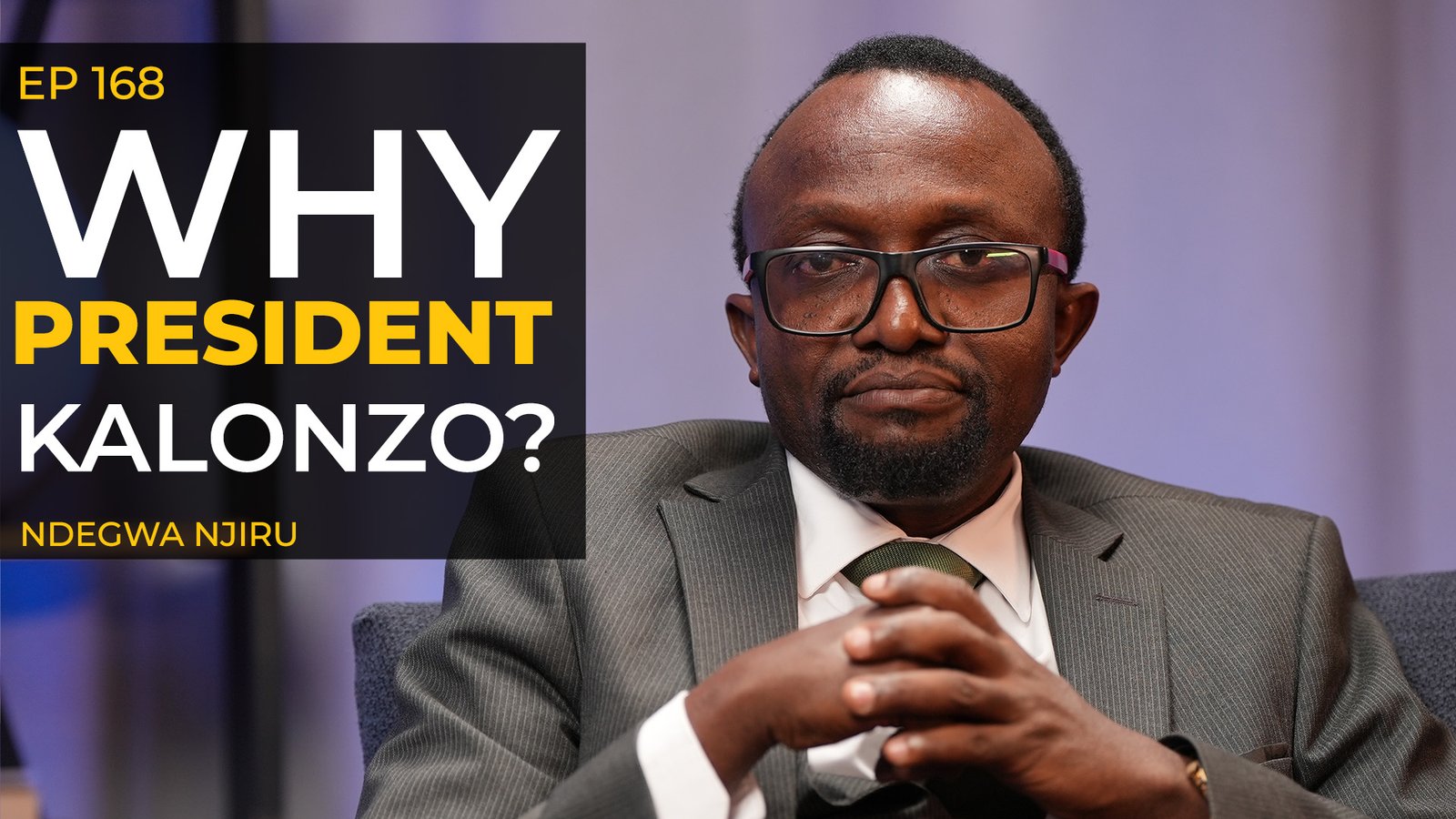

As Kenya’s political battle ahead of the 2027 General Election intensifies, lawyer and Wiper Patriotic Front leader Ndegwa Njiru has made a strong case for Kalonzo Musyoka, arguing that his character, public service experience and commitment to constitutionalism make him one of the country’s strongest presidential options.
Speaking on Mambo Africa, Njiru said Kenya requires more than another change of political personalities. He argued that the country needs a fundamental shift in governance built around the rule of law, accountability, economic productivity and institutions that can operate without political interference.
For Njiru, Kalonzo represents the kind of leadership required to deliver that change.
His argument goes beyond the race for State House. During the wide-ranging conversation, Njiru outlined what he described as Wiper’s vision for a “New Republic”, addressing corruption, taxation, healthcare, food security, natural resources, public service reform and Kenya’s growing debt burden.
Why Ndegwa Njiru Believes Kalonzo Musyoka Is Ready for the Presidency
At the heart of Njiru’s argument is character.
He believes Kenyans should assess presidential candidates not only on campaign promises but also on their history in public service, respect for institutions and willingness to operate within the Constitution.
Njiru pointed to Kalonzo’s long political career and experience in government as evidence that he understands how the Kenyan state works.
He also highlighted Kalonzo’s role in Kenya’s constitutional journey and portrayed him as a politician who has consistently demonstrated respect for the rule of law.
According to Njiru, this distinction will be crucial in 2027.
Kenya, he argues, does not lack laws or institutions. The bigger challenge is whether the people entrusted with power are prepared to respect those institutions.
“Fix the Rule of Law and You Fix Kenya”
One of the strongest themes of the conversation was constitutionalism.
Njiru argued that many of Kenya’s political and economic problems can be traced to the failure to properly implement the Constitution and allow independent institutions to perform their duties.
In his view, fighting corruption, protecting public resources and rebuilding confidence in government all begin with respecting the rule of law.
He argued that institutions such as the Office of the Director of Public Prosecutions and anti-corruption agencies must be able to operate independently, without interference from powerful political interests.
Njiru believes a Kalonzo administration would make constitutionalism a central part of government.
Rather than creating new institutions every time the country faces a problem, he argued that Kenya should strengthen the institutions it already has and allow them to operate as intended.
Zero Tolerance for Corruption
Corruption also featured prominently in Njiru’s vision for a future government.
He linked Kenya’s enormous public debt, heavy taxation and limited resources available for development to wastage and corruption within government.
For ordinary Kenyans, he argued, the consequences are visible through rising taxes and pressure on household incomes.
Njiru believes Kenya cannot continue borrowing while simultaneously losing public resources through corruption and mismanagement.
He called for stronger accountability, recovery of stolen public wealth and independent institutions capable of investigating powerful individuals without political protection.
Under the system he advocates, public service appointments would also place greater emphasis on merit rather than political loyalty.
Can Kenya Reduce Its Dependence on Taxes?
Njiru also challenged the idea that continually increasing taxation is the only way the government can finance its operations.
He argued that Kenya possesses significant economic resources that remain underdeveloped, including minerals, tourism and other natural assets.
Wiper’s approach, he said, would seek to develop alternative sources of government revenue so that the state does not constantly respond to budgetary challenges by imposing additional taxes on citizens and businesses.
Mining was one area he highlighted as having significant potential.
Njiru believes Kenya should properly map and exploit its natural resources while ensuring that the resulting revenue benefits the country.
Tourism, another major source of foreign exchange and employment, could also contribute much more to national revenue if properly developed.
The objective, he argued, should be a government with a broader revenue base and a more predictable taxation system.
Wiper’s Food Security Plan
Food security forms another pillar of the policy agenda Njiru presented.
However, he argued that Kenya should look beyond simply producing enough food.
The country must also consider food safety, agricultural productivity and the health consequences of what citizens consume.
For farmers, this would require policies that improve agricultural productivity while protecting the quality of soil and food produced.
Njiru linked agriculture directly to both economic and health policy, arguing that a country capable of feeding its population safely and affordably will reduce pressure in several other areas of government.
Preventive Healthcare Instead of Waiting for People to Get Sick
Njiru also outlined an approach to healthcare that places greater emphasis on prevention.
Rather than concentrating most government resources on treating citizens after they become seriously ill, he argued that Kenya should invest more heavily in preventing disease.
This would include addressing food safety, lifestyle-related illness and other factors that eventually place pressure on hospitals.
Njiru believes preventive healthcare could reduce the long-term burden on Kenya’s health system while creating a healthier and more productive population.
Curative healthcare would remain essential, but prevention should become a much larger part of national health policy.
The Debate Over Kenya’s Debt
Kenya’s public debt remains one of the biggest economic questions facing any candidate seeking the presidency in 2027.
Njiru argued that the solution cannot simply be more taxes and more borrowing.
Instead, he advocates reducing government wastage, fighting corruption, expanding productive sectors and using natural resources to generate additional revenue.
He also called for greater accountability around borrowing and how borrowed money is spent.
For Njiru, the national debt debate is ultimately linked to governance: Kenyans must be able to see tangible economic value from the money borrowed in their name.
Political Violence and the Road to 2027
The interview also addressed the increasingly confrontational nature of Kenyan politics.
Njiru raised concerns about the use of organised groups during political events and warned against normalising political violence ahead of the 2027 election.
He argued that young people should not be exploited for political confrontation and called for accountability whenever violence is organised or encouraged.
The discussion reflects growing concern about whether Kenya’s next election cycle will be defined by competing policies or increasingly hostile political mobilisation.
Njiru insists that the contest should ultimately be about ideas, leadership and the future direction of the country.
Can Kalonzo Unite the Opposition?
A major question remains whether Kalonzo Musyoka will eventually become the presidential flagbearer of the broader opposition.
Kenya’s opposition contains several prominent figures with presidential ambitions, meaning negotiations over a common candidate could become one of the defining political battles ahead of 2027.
Njiru nevertheless believes Kalonzo deserves serious consideration.
His argument is that after decades in national politics, Kalonzo combines experience with a reputation for political restraint and respect for constitutional processes.
For voters, however, Njiru says the decision should ultimately be based on much more than party loyalty.
Kenyans must examine the character, record, policies and integrity of every candidate asking to control the country’s enormous presidential powers.
“Kenya Needs a New Captain”
Towards the end of the conversation, Njiru used the analogy of a ship to explain his position on Kenya’s leadership.
The country, he argued, requires a captain capable of steering it away from economic and political danger and towards prosperity.
For him, that captain is Kalonzo Musyoka.
Njiru believes a Kalonzo presidency centred on constitutionalism, fighting corruption, food security, preventive healthcare, natural-resource development and institutional independence could offer Kenya a fundamentally different direction.
Whether Kenyan voters agree will become clearer as the 2027 presidential race takes shape.
But Njiru’s argument raises a larger question that extends beyond Kalonzo Musyoka or any other individual candidate:
Will Kenya’s 2027 election once again be determined by political personalities and alliances—or will voters demand detailed solutions to corruption, debt, taxation, healthcare, jobs and the cost of living?
The answer could determine not simply who becomes Kenya’s next President, but what kind of country emerges after 2027.
Watch the full conversation with Ndegwa Njiru on Mambo Africa and join the discussion: Is Kalonzo Musyoka the leader Kenya needs in 2027?

Leave a Reply